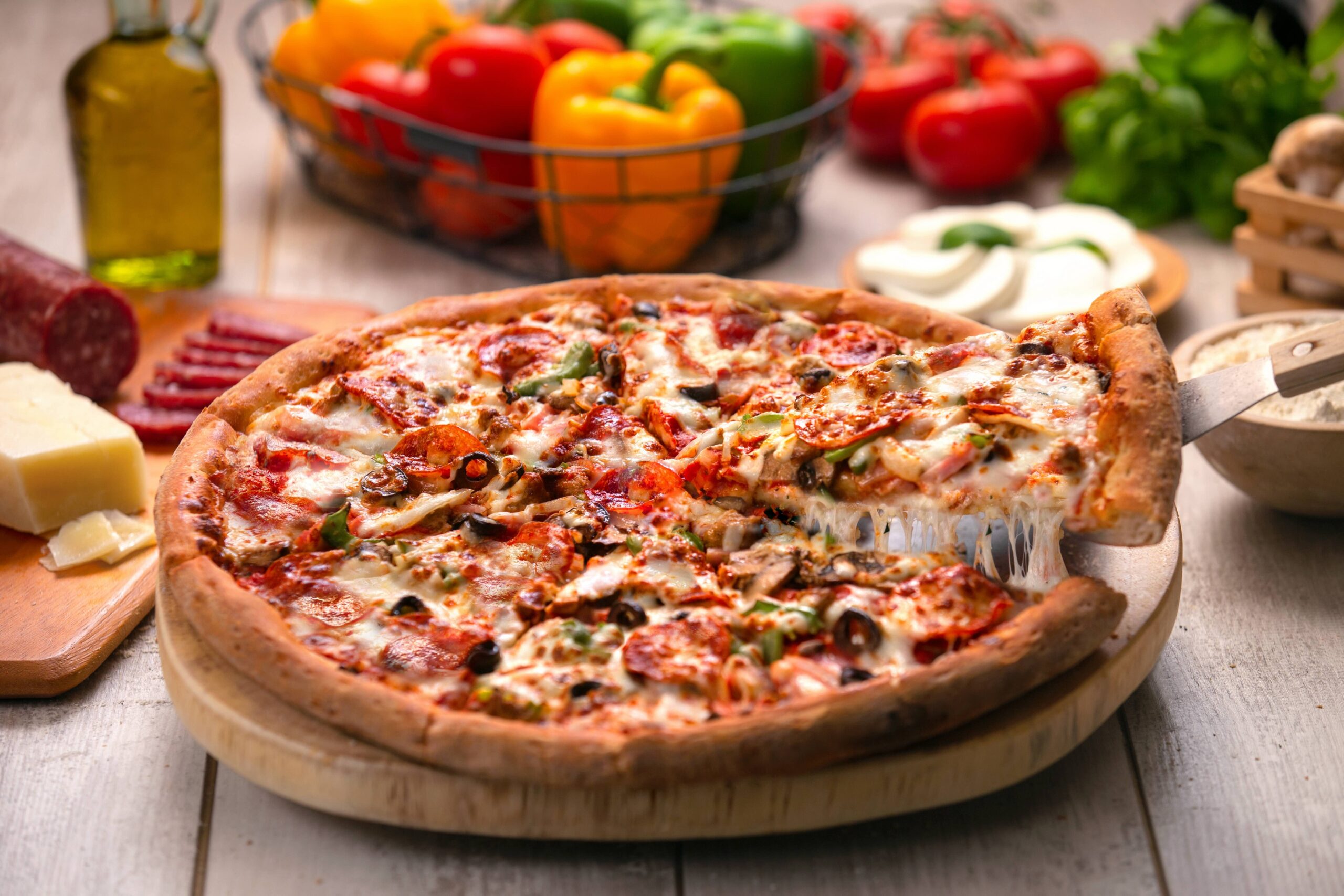
Making The Dough:Put flour in bowl Then add yeast to warm water & mix then add sugar to warm water & mix and let foam up Later add the mixture to flour, mix – then add salt and continue mixingAfter mixing well add a little more flour so it cleans up the side of bowl Pour onto table and knead adding a touch more flour if neededThen place into oiled bowl & cover for at least 1 1/2 hoursUsing a warm oven – Proof setting – let dough rise then knead & use a little more Flour, then sprinkle Semolina on Pizza Peel so it doesn’t stick to peel.Pizza Toppings:Use any toppings you desire.What I Used:Pizza Sauce your choiceChopped Chunky Fresh Garlic Chopped ArtichokesSalute Garlic, Scallions & sliced MushroomsPartially cook the Sausage & lightly chop upMozzarella cheese & Pecorino cheeseCrushed whole tomatoes Chopped Basil after pizza is cooked & sprinklePlace in oven and rotate if needed at 450 to 500 degreesThen Broil watching it don’t burn the topping it can happen quickly
Video
Notes
A little about where Pizza came from:
Pizza as we know it today comes from Naples, Italy, but its deeper roots stretch much further back.
Early Origins (Ancient History)
Long before “pizza” existed, many civilizations ate flatbreads with toppings:
Ancient Egyptians, Greeks, and Romans all made versions of seasoned flatbreads.
The Romans had panis focacius (focaccia), which was topped with herbs, cheese, and oils.
Birth of Modern Pizza (1700s–1800s, Naples)
The iconic version—flat dough topped with tomatoes, cheese, and baked quickly—emerged in the working-class neighborhoods of Naples.
Tomatoes arrived in Europe from the Americas in the 1500s.
Poor Neapolitans began putting tomatoes on flatbread in the 1700s.
By the 1800s, pizza was a common street food among the urban poor.
Margherita Legend
The famous Pizza Margherita (tomato, mozzarella, basil) is traditionally said to have been created in 1889 by pizzaiolo Raffaele Esposito to honor Queen Margherita of Savoy. Historians now debate the accuracy of this story, but the style absolutely originated in Naples.
Spread to the World
Pizza remained mostly Neapolitan until Italian immigrants brought it to the U.S. in the late 1800s–early 1900s:
First documented U.S. pizzeria: Lombardi’s in NYC, 1905.
After WWII, pizza exploded in popularity across America and then globally.
In Short
Ancient ancestor: flatbreads with toppings.
Modern pizza:Naples, 1700s–1800s.
Global spread: Italian immigration + American popularity.